The heavy mist clinging to the ridges of the Khasi Hills does more than just decorate the green landscape of Meghalaya; it creates a brutal laboratory for survival.
For centuries, the indigenous communities of Northeast India have lived in a daily negotiation with some of the wettest, most volatile weather on Earth. Today, while the modern world scrambles for “green solutions” to stop climate change, these tribal builders are already generations ahead.
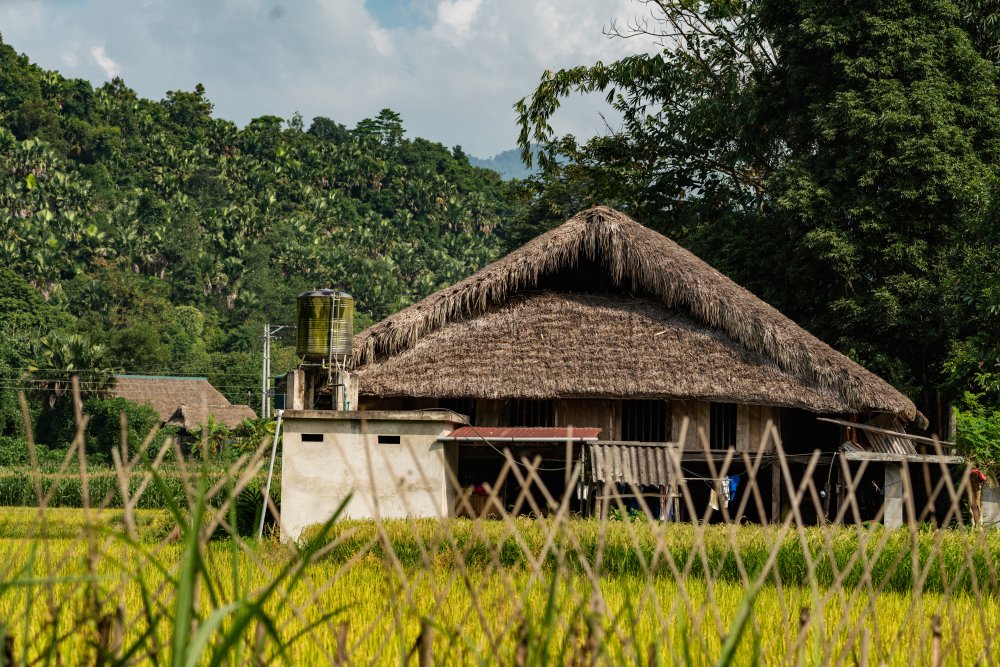
To look at a traditional stilt house in Nagaland or Mizoram is not to look back at a primitive past. It is to stare directly at a brilliant, eco-friendly future. This is the story of architecture in the sky—where local genius reframes the region not as a remote corner, but as a global pioneer of sustainable living.
Photo from: kaarwan.com
For a long time, outsiders dismissed bamboo as the “poor man’s timber.” That label shows a complete misunderstanding of the plant’s natural power.
In the hands of a master builder from the region, a single stalk of bamboo is a high-tech building block. It can stretch without breaking better than steel, and it handles heavy weight better than concrete. Best of all, it grows so fast that it makes regular trees look like they are standing still.
Right now, the global construction industry causes nearly 40% of the world’s carbon emissions. The Northeast offers a beautiful alternative: buildings that actually breathe.
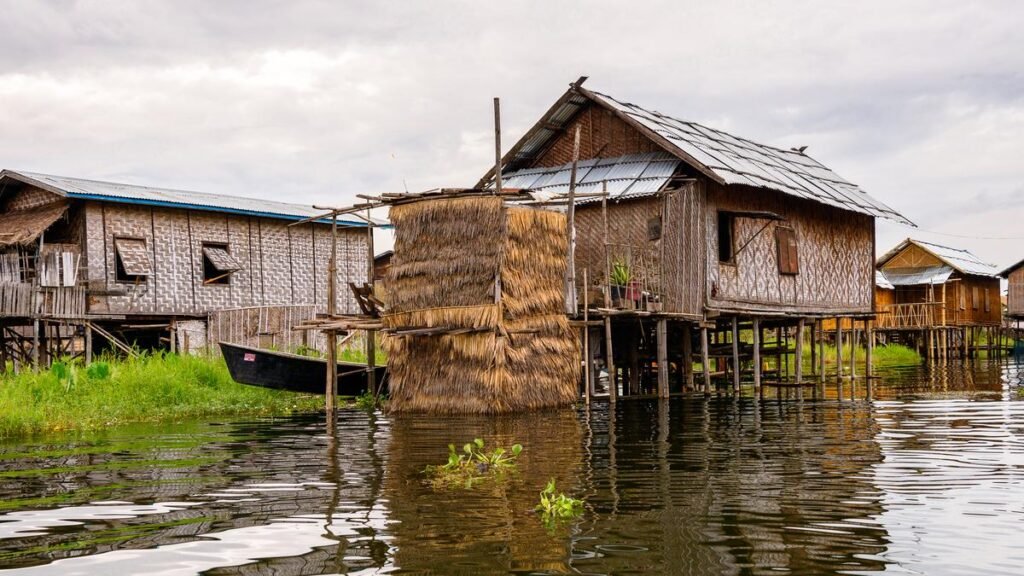
These structures are not forced onto the land; they are woven into it. Because bamboo is naturally flexible, traditional builders have created homes that gently sway during the region’s frequent earthquakes, absorbing shocks that would instantly crack a rigid brick-and-mortar house.
Photo from: thehindu.com
The real magic happens where this ancient forest knowledge meets modern science. Today, contemporary architects are traveling into the hills to study how these high-altitude structures stay perfectly comfortable without expensive, energy-hungry air conditioning.
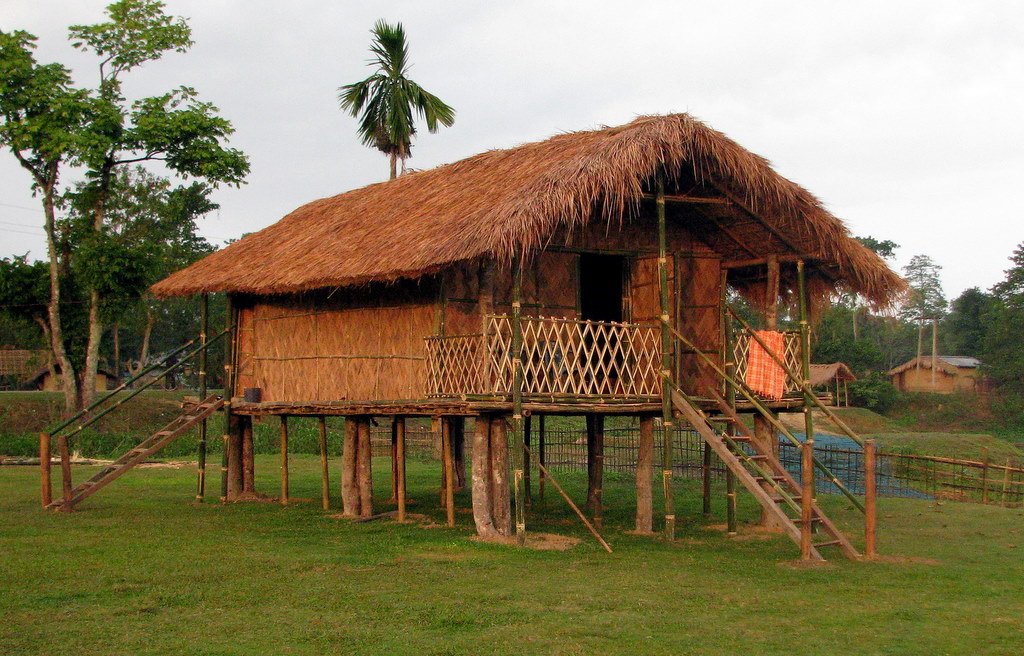
The secret lies in the design. The natural hollowness of the bamboo poles acts as a built-in layer of insulation. Meanwhile, the high wooden stilts—originally used to handle uneven mud and keep out dampness—create a natural breeze that cools the home during humid summers.
This is natural cooling at its finest. Choked, fast-growing cities like Delhi or Bangalore could easily find their lungs again if they adopted the airy, modular style of bamboo design.
This way of building also heals a social divide within the Northeast itself. By turning bamboo from a basic rural necessity into an urban dream, it bridges the gap between ancient tribal identity and modern ambition.
It allows a young person in Mizoram or Arunachal Pradesh to see their heritage not as a barrier to progress, but as the main engine of it.
Photo from: namdaphatoursandtreks.wordpress.com
When a modern bamboo public library or community center is built with the same respect as an ancestral longhouse, it honors the indigenous mind. It proves that the “way of the forest” is not a lack of development, but a much smarter way to live—one where humans build beautifully without wiping out nature.
Bamboo architecture in the sky is more than just clever engineering; it is a symbol of what the region can do. It rises far above old, lazy stereotypes of isolation or “backwardness.”
As the global climate crisis gets worse, the world will have to look toward the people who perfected the art of leaving a gentle footprint on the earth.
The Northeast stands ready to lead the way, offering a blueprint for a world that desperately wants to build higher without losing its soul. In the rustling bamboo groves, the future is already standing, reaching toward the clouds with its roots firmly planted in the wisdom of the earth.