The Last Men with Faces of Stone: The True Story Behind Nagaland’s Headhunters
The morning mist clings heavily to the hills of Mon, a remote district in the northernmost reaches of Nagaland.
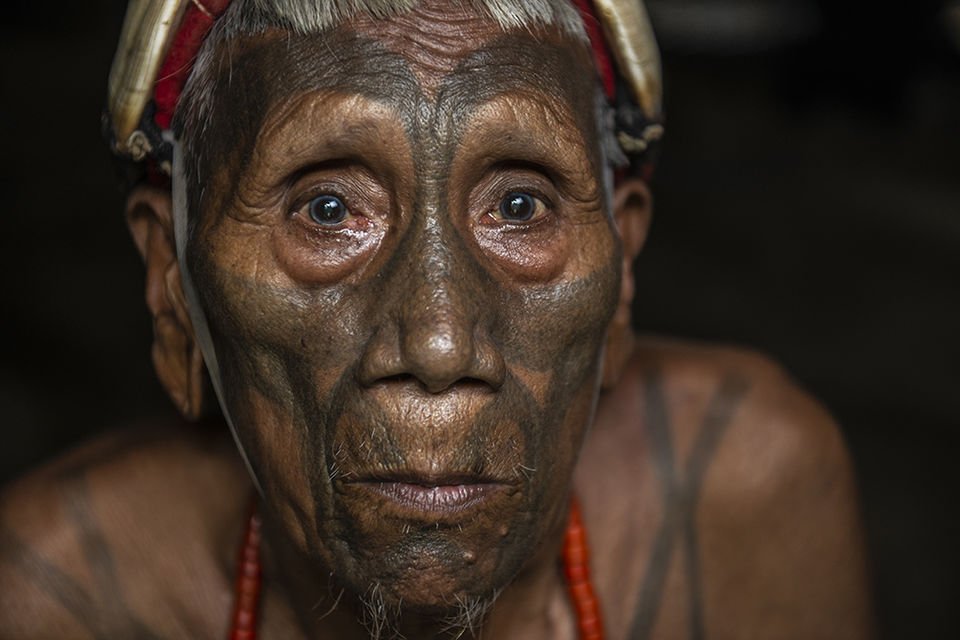
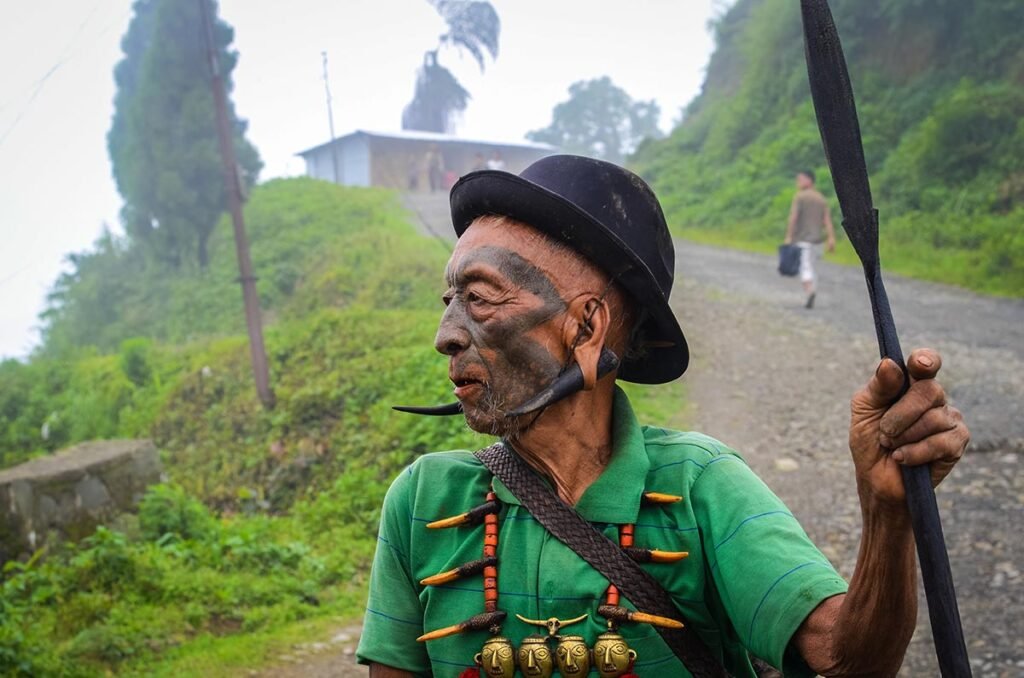
In the quiet dawn, an elderly man steps out of his wooden house. His face is etched with dark, intricate tattoos—the unmistakable mark of the skull.
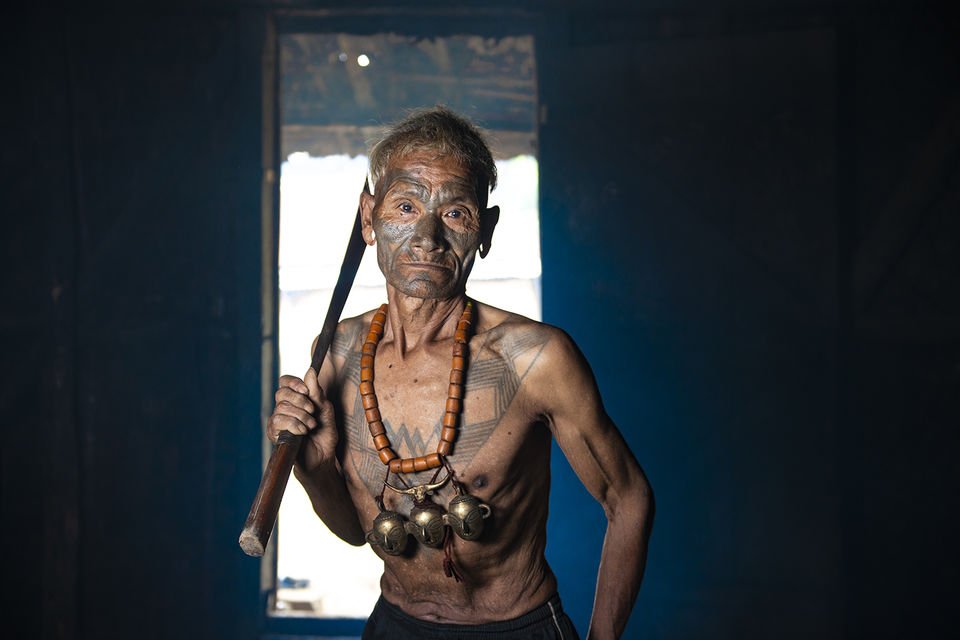
He belongs to the Konyak tribe, and he is one of the last living headhunters on Earth. Decades ago, in the mid-20th century, these hills echoed with the sounds of tribal warfare.
Today, this final generation of warriors stands as a living bridge between a vanished world and the modern age. To the outside world, the word “headhunter” conjures images of savage cruelty. But if you sit with these elders, a much deeper, more sacred story unfolds.
To understand the tattoo, you must first understand the soul. The Konyaks did not hunt heads out of anger or malice.
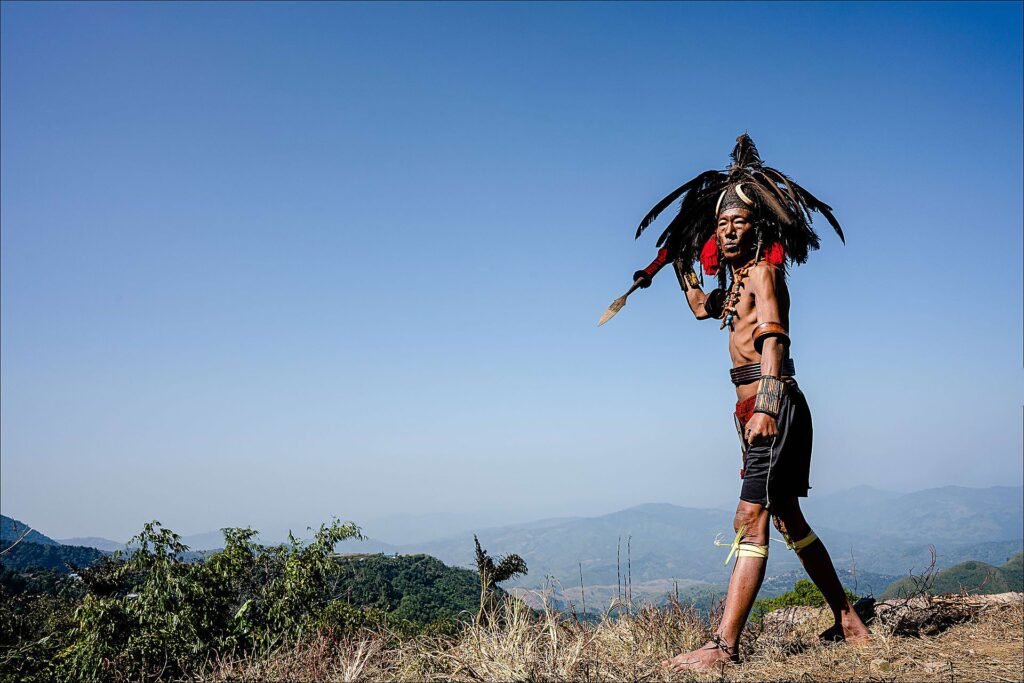
To them, the human skull was a sacred vessel holding a powerful “life force.” They believed this spiritual energy was the engine that kept their world turning.
It made the soil fertile, kept the livestock healthy, and brought prosperity to the village. When crops failed or a mysterious sickness struck, it meant the village’s spiritual battery was running low.
A successful raid against a rival village was the only way to capture new energy, bring it home, and restore balance to the universe.
In this society, a man’s worth had nothing to do with what he owned, but everything to do with how he protected his people.
The tattoos needle-pricked into a warrior’s skin were his hard-won badges of honor—a permanent resume of courage written on the flesh. Each specific pattern showed exactly what the warrior had achieved.
Without these marks, a young man was an outcast, unable to marry or speak in the village council.
The greatest warriors became the pillars of support for the Anghs—the hereditary chiefs—while young boys were sent to the Morung, a communal dormitory that acted as a school for survival. Here, around open fires, they learned the art of war and memorized the ancient songs of their ancestors.
Then, the world changed overnight. In the mid-1900s, British rulers and Christian missionaries arrived in the Naga hills, shattering the old ways of life.
The belief in the life force stored in bone was replaced by the promise of salvation in the Bible. By the 1960s, the practice of headhunting was banned and officially put to rest.
This left an entire generation of young men caught in a painful trap. Trained from birth to be fierce warriors, they suddenly found their lifelong purpose labeled a sin by a new faith and a crime by a distant government.
They became men trapped between two eras, carrying the physical marks of a forbidden past into a rapidly changing future.
Today, the young people of Nagaland are not looking to return to the violent battles of the past, but they are fiercely proud of who they come from.
For the people of Northeast India, the legacy of the headhunter is proof of an unbroken spirit that survived colonialism.
They are reclaiming their own history, proving it was never “savage,” but rather a deeply complex and rich culture tied to the rugged mountains they call home.
As the facial tattoos of the few remaining octogenarians begin to soften and fade, the true spirit of the warrior lives on—not through war, but through a proud refusal to let their history disappear into the mist.