The Moidams of Charaideo: The “Pyramids of the East”
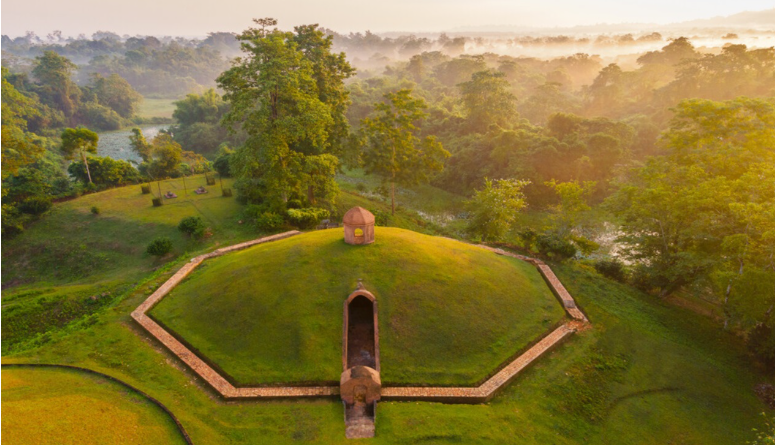
Rising like gentle, symmetrical hillocks from the foothills of the Patkai range, the Moidams of Charaideo possess a quiet, monumental grandeur that has earned them the moniker "the Pyramids of the East." For six centuries, this sacred necropolis served as the final resting place for the Swargadeos—the divine kings of the Tai-Ahom dynasty who successfully repelled Mughal expansion and fostered an unbroken era of regional sovereignty. Structurally, these earthen tumuli are masterpieces of early engineering, containing vaulted brick or stone chambers that housed the mortal remains and royal insignia of the rulers, all enclosed by symbolic octagonal walls. Yet, the global spotlight reflecting off these mounds tells a story far deeper than ancient architecture. The global validation of the Charaideo Moidams as a UNESCO World Heritage Site has triggered a profound cultural awakening among Tai-Ahom youth, who are actively mining their "Golden Age" history to forge a modern political and cultural identity.
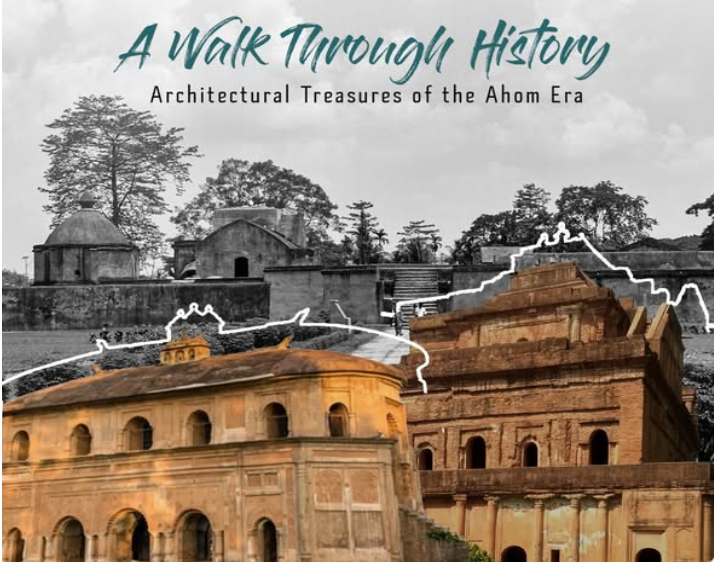
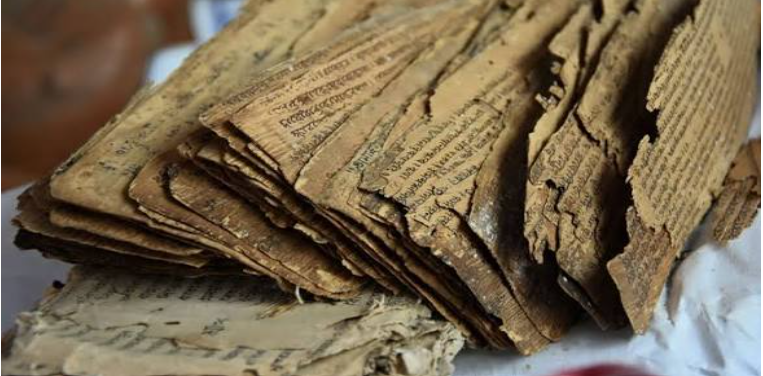
For generations, the history of the Ahom kingdom was frequently relegated to a footnote within the broader, subcontinent-centric narrative of Indian history. This historical erasure bred a distinct sense of peripheral isolation across the Brahmaputra valley. However, the international recognition of Charaideo has effectively dismantled this narrative of marginalization. For young Tai-Ahom activists, scholars and digital creators, these 700-year-old mounds are no longer static tombs; they are living, irrefutable evidence of a sophisticated, highly organized civilization that governed with exceptional administrative and mechanical durability. The youth are leveraging this monumental heritage to assert their presence in contemporary political discourses, transforming ancestral pride into a powerful leverage point for cultural autonomy, constitutional protections and indigenous land rights.This historic rediscovery is manifesting in a vibrant resurgence of ancestral traditions that had long been pushed to the private, domestic fringes. Annual rituals like Me-Dam-Me-Phi, the collective worship of ancestors and departed souls, have transformed from insular community gatherings into massive, youth-led public festivals. Young people are actively learning the liturgical Tai-Ahom language, translating ancient historical chronicles called Buranjis, and utilizing digital platforms to archive the unique material culture of their ancestors. This is a deliberate, strategic counter-movement against global cultural homogenization, where the younger generation is choosing to anchor their modern, digital-native lives in the complex, ritualistic geography of their specific homeland.
This cultural renaissance beautifully captures the ultimate transition from a 600-year sovereign past to the contemporary evolution of Assamese identity. The modern quest for regional recognition in Assam does not require looking outward for validation; it requires looking deep into the soil of Charaideo.By successfully bridging the legacy of Prince Sukaphaa’s medieval empire with the political aspirations of a 21st-century generation, the Tai-Ahom youth are rewriting what it means to be indigenous. They stand as a resilient testament to the fact that when a community's historical roots are acknowledged on the global stage, its youth gain the intellectual clarity and political agency needed to construct an unshakeable, future-forward future.