The “Inner Line” Paradox
The concept of the Inner Line Permit is historically rooted in a protectionist philosophy, designed during the colonial era and maintained post-independence to insulate indigenous tribal cultures, land, and resources from majoritarian external influence.
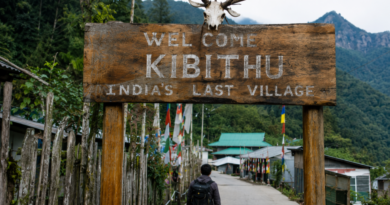
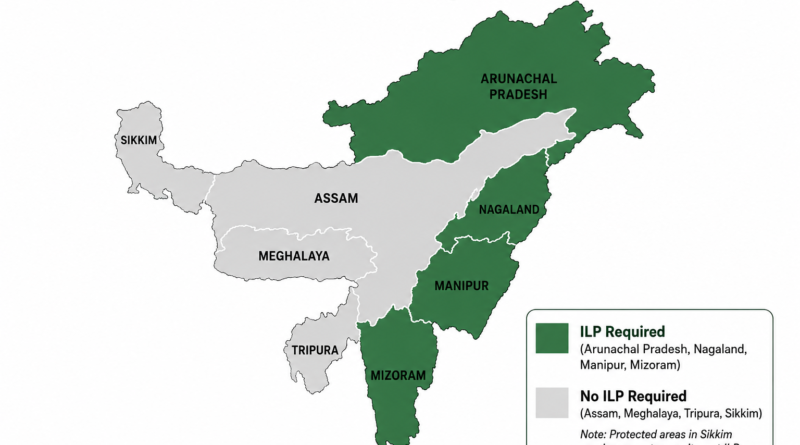
In states like Arunachal Pradesh, Nagaland, Mizoram, and Manipur, this travel document serves as a legal shield, barring non-indigenous citizens from purchasing land or settling permanently, thereby safeguarding the heritage of communities like the Nyishi, Adi, Apatani, Monpa, and Naga tribes. While this regulatory mechanism remains a vital political and emotional instrument for demographic preservation, the reality on the ground has quietly outpaced the rigid boundaries of the law.
As India becomes increasingly interconnected, a growing demographic of mixed-identity families—born of marriages between ILP-protected tribal individuals and mainlanders—finds itself navigating a complex legal, social, and emotional maze.At the heart of this paradox are the individuals who embody the bridge between two worlds, existing in a state of perpetual negotiation with bureaucratic structures. For a child born to a tribal mother and a non-tribal father, the legal landscape is fraught with ambiguity regarding inheritance, land ownership rights, and Indigenous status.
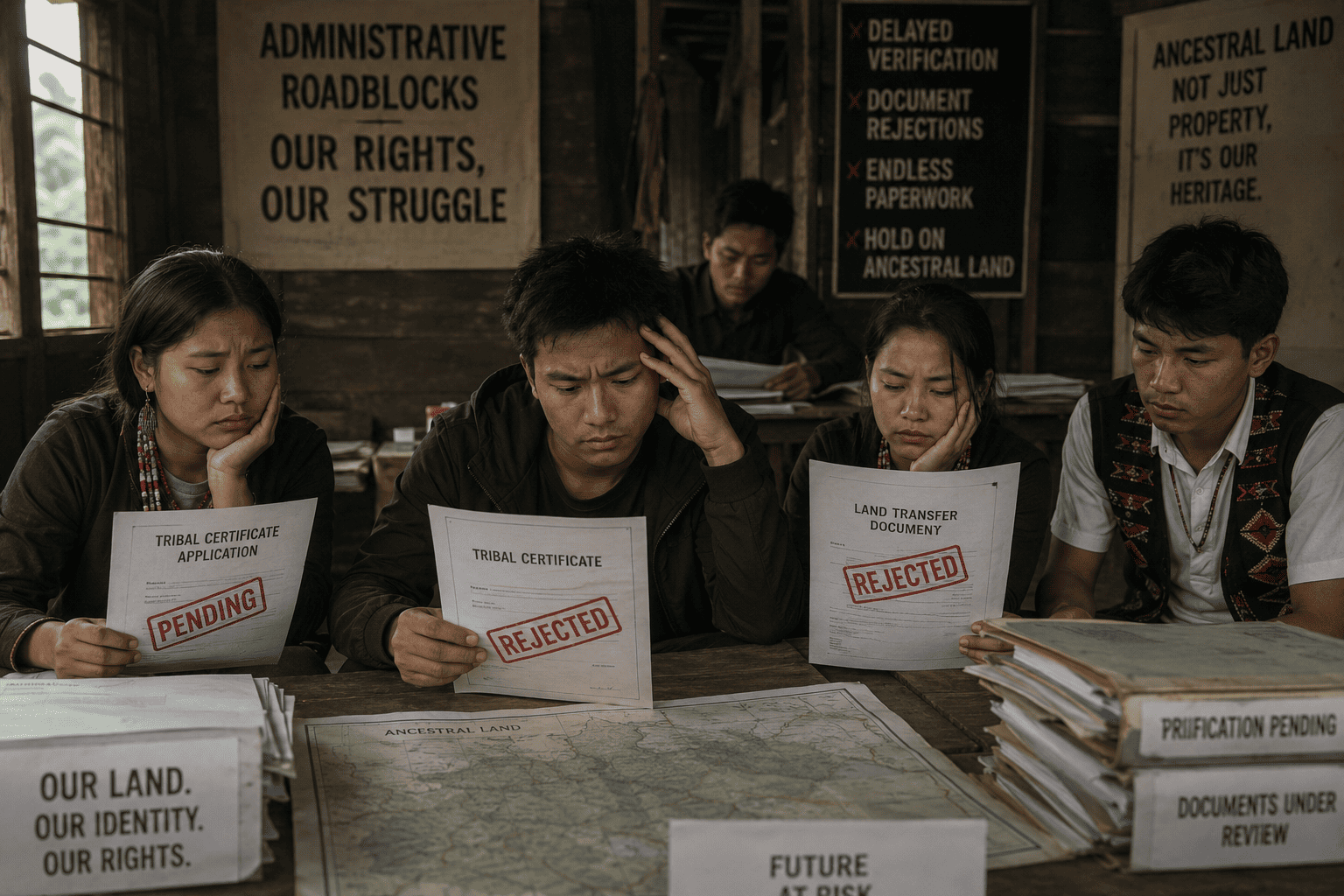
Despite being raised within the geography, rhythm, and linguistic traditions of the hills, these youth frequently encounter administrative roadblocks when trying to secure basic tribal certificates or pass down ancestral land.
The law, by design, views identity as a binary—one is either an indigenous protector of the land or an outsider requiring a permit—leaving very little institutional room for the nuanced lived experience of dual heritage. This tension turns a macro-political debate into an intimate, daily struggle over belonging, where families must carefully catalog their lineage just to prove their right to exist permanently in their own homes.Socially, these families hold up a mirror to the creeping parochialism that occasionally surfaces within regional identity movements. In local community spheres, mixed-identity individuals often face a dual burden of proof, sometimes viewed with underlying skepticism at home for being "diluted" while simultaneously navigating the distinct mainland prejudices when they step outside the region for education or employment.
Yet, despite these systemic friction points, these families are actively rewriting what it means to belong to the Northeast. They do not represent a threat to cultural preservation; rather, they are becoming its most resilient custodians, blending distinct cultural traditions, languages, and perspectives under one roof. They prove that a household can fiercely protect and practice indigenous customs while maintaining a deep, organic connection to the rest of the nation.This quiet evolution captures the defining paradox of a region transitioning into a highly mobile era. The Inner Line Permit remains an indispensable legal defense against structural exploitation, yet its rigid framework must eventually confront the human reality of a shifting, modern population.
By looking closely at the families operating in this middle ground, it becomes clear that identity cannot be fully contained by legal permits or border checkpoints. These households serve as the ultimate living bridge, demonstrating that the future of regional preservation does not lie in forced isolation but in the strength of an interconnected generation that knows exactly how to honor the protectionist past while stepping boldly into a shared national future.